

Most QR scan failures are not random. They usually come from one of three areas: the encoded payload is wrong, the visual design is hard for scanners to read, or the printed placement does not match the intended scan distance.
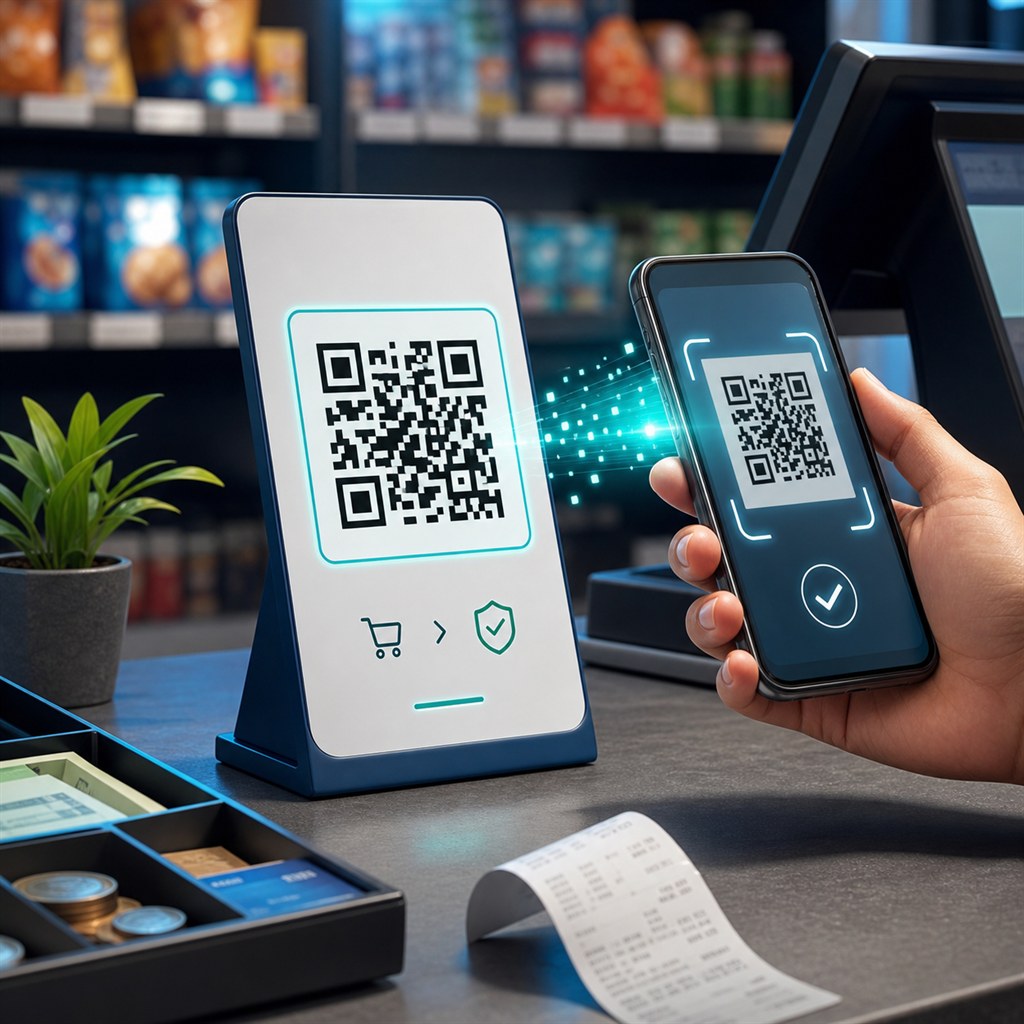
This guide gives you a practical checklist for diagnosing QR codes that fail on phones, print materials, UPI payment standees, WiFi cards, menus, posters, and logo QR designs.
Quick diagnosis: payload, design, or print
Start by separating scan detection from destination correctness. If the phone does not detect the QR at all, the problem is usually visual: contrast, quiet zone, size, glare, logo, or print quality. If the phone detects the QR but opens the wrong thing or fails after scanning, the problem is usually the payload.
WebToolsPlanet helps with both sides: the QR Code Generator validates payload fields and shows scan-safety warnings, while export options let you choose SVG or high-resolution PNG for print.
- No scan prompt: check contrast, quiet zone, print size, logo, and glare
- Scan prompt opens wrong target: check the encoded URL, WiFi details, UPI ID, or phone number
- Works on screen but not print: check export size, physical size, paper finish, and lighting
Mistake 1: low contrast or inverted colors
Scanners need a clear difference between dark modules and the background. Pale gray modules on white, brand colors that are too close together, transparent QR codes placed on busy artwork, and inverted white-on-black designs all reduce reliability.
Use dark foreground modules on a white or near-white background when reliability matters. If you use brand colors, test the final foreground and background pair with the Color Contrast Checker and then scan the exported QR on real devices.
- Reliable default: black, navy, or charcoal modules on white
- Avoid low-contrast pastel combinations
- Avoid transparent backgrounds on photos, gradients, or textured artwork unless tested
Mistake 2: cropping the quiet zone
The quiet zone is the blank margin around the QR pattern. Scanners use it to find the edges of the code. Cropping the margin, placing text too close, or dropping the code into a busy frame can make the QR harder to detect even when the modules themselves are correct.
Keep a clean margin around the QR. In WebToolsPlanet, leave the margin setting at a safe value for print, and do not crop the exported file inside a design tool.
- Keep at least 2-4mm of clear space around small printed codes
- Do not let decorative frames touch the QR pattern
- Do not place captions, icons, or borders inside the quiet zone
Mistake 3: printing too small or with too little resolution
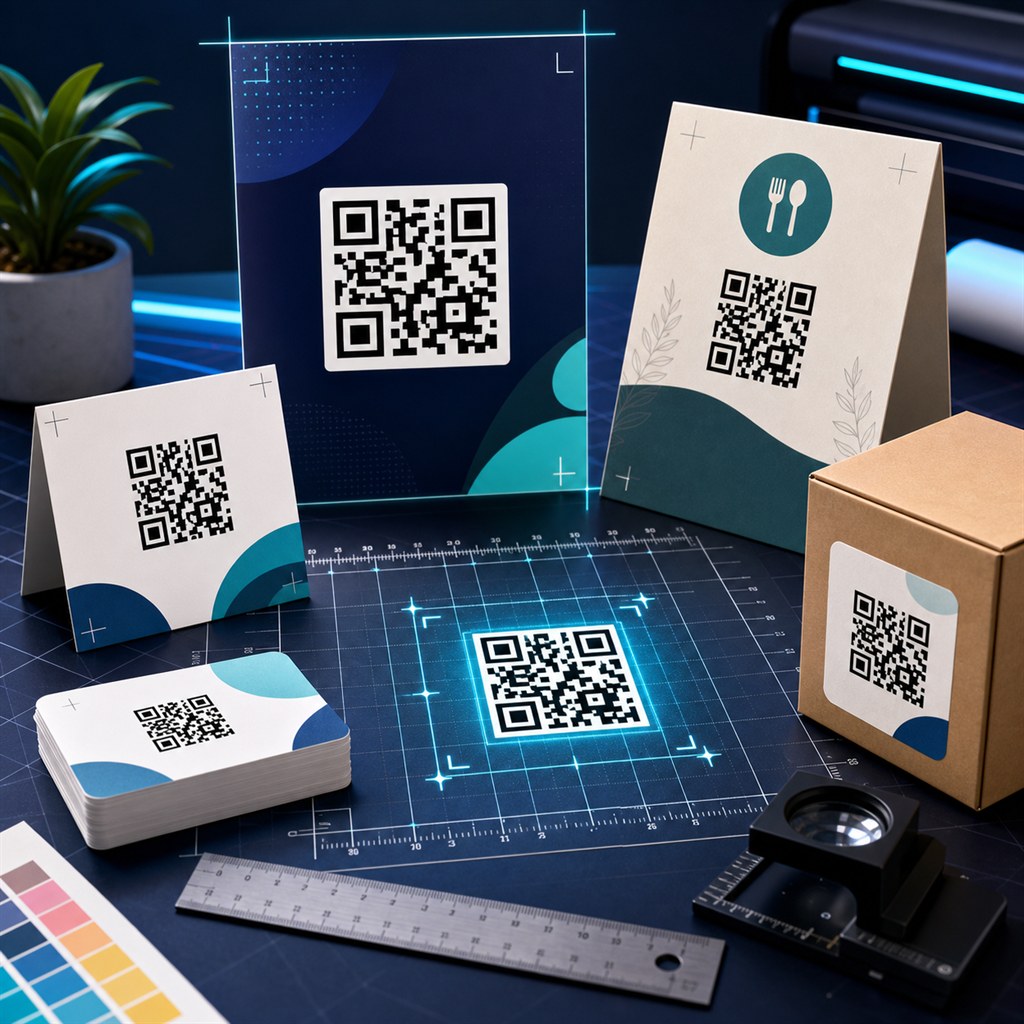
A QR code that scans from a monitor can fail when printed small on a business card, receipt, or label. Physical size matters because phone cameras need enough visible module detail at the intended scan distance.
Use SVG for print whenever possible. If you need PNG, use 1024px for small print, 2048px for standard print, and 4096px for larger signage. Then print a test copy at the final size and scan it from the real viewing distance.
- Business card: test carefully at 1.5-2.5cm
- Menu or table card: 5-7cm is usually more comfortable
- Poster or wall sign: scale based on expected scan distance
Mistake 4: oversized logo or weak error correction
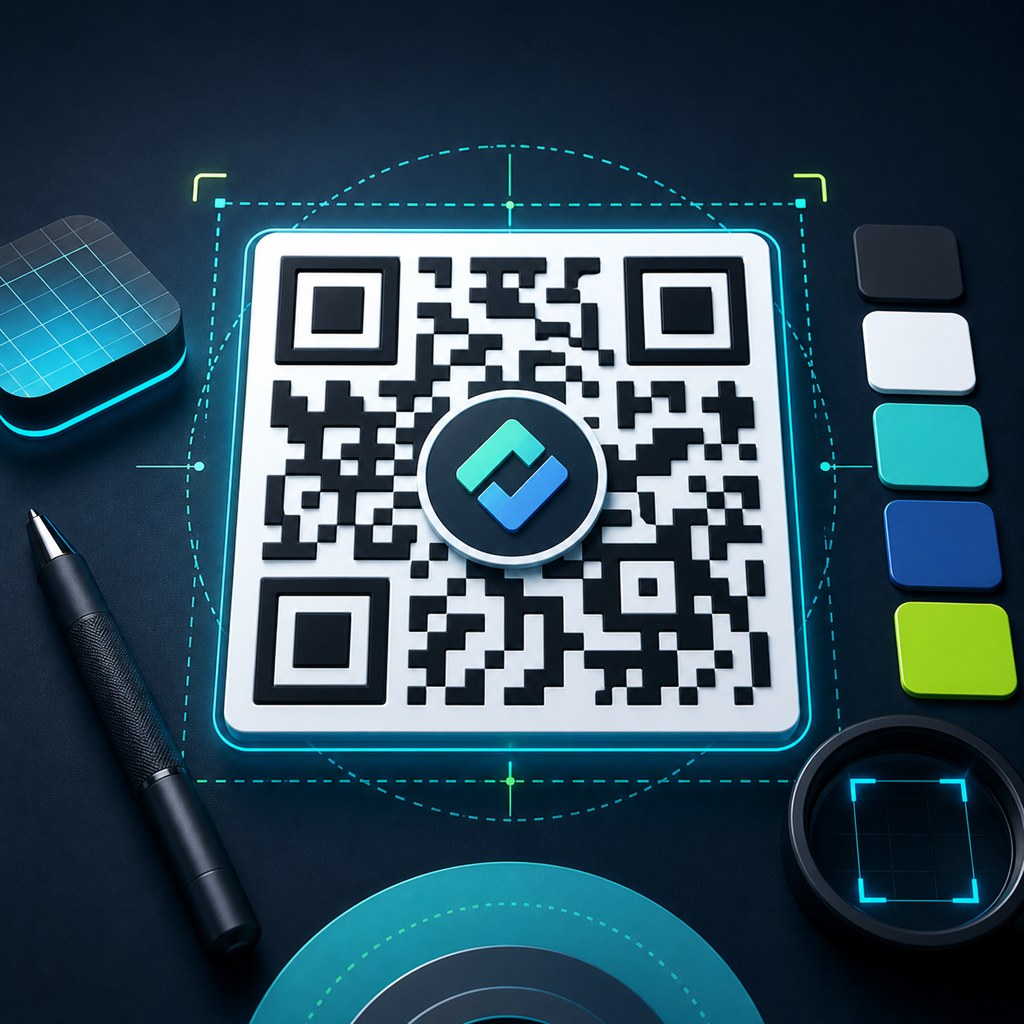
A center logo hides some QR modules. Error correction can recover from that, but only within limits. If the logo is too large, has a large white background block, or the QR uses low error correction, many scanners will fail.
For logo QR codes, use H error correction, keep the logo near 20-25% of the QR width, add padding around the logo, and test with iPhone Camera, Android Camera, and Google Lens before printing.
- Use H error correction for logo QR codes
- Keep logos below 25% unless the mark is extremely simple
- Reduce logo size before changing anything else when scans are inconsistent
Mistake 5: encoding too much data
Long payloads create denser QR codes with smaller modules. Dense QR codes are harder to scan when printed small, styled heavily, or placed in poor lighting. This is common with long URLs, tracking parameters, full contact cards, event details, and complex WiFi names or passwords.
Keep the payload short when possible. Use a clean landing page URL, remove unnecessary tracking parameters before encoding, and choose a larger print size when the payload must stay long.
- Short URLs scan better than long URLs with many parameters
- Dense QR codes need larger print sizes
- Avoid combining a long payload with a large logo and low contrast
Mistake 6: correct scan, wrong payload
Sometimes the QR scans perfectly but the result still fails. A WiFi QR might have the wrong SSID capitalization, a UPI QR might use a mistyped VPA, a WhatsApp QR might miss the country code, or a URL QR might point to a staging page instead of production.
Validate the payload before judging the QR design. For WiFi, test that a phone can actually join the network. For UPI, scan with a payment app and confirm the payee name, UPI ID, amount, and note before accepting real payments.
- WiFi: SSID, password, security type, hidden-network setting
- UPI: VPA, payee name, amount, note, and real payment verification
- URL: final destination, HTTPS status, redirects, and mobile landing page
Mistake 7: testing only on one screen
Testing a QR on your own monitor is not enough. Screen brightness, pixel density, and viewing distance are more forgiving than a printed card, glossy menu, receipt, or wall sign.
A reliable test uses the final exported file, the final physical size, the final material, and the likely scanning distance. Test with at least one iPhone camera flow and one Android flow, then verify that the destination or payment screen is correct.
- Scan the exported file before printing
- Scan a physical test print before bulk printing
- Test in the real lighting and from the real distance
A safer WebToolsPlanet workflow
Create the QR in the main QR Code Generator when you need multiple payload types, or use the dedicated WiFi, UPI, and logo QR tools when the job is specific. Keep the design simple first, scan-test it, then add styling only if the reliable baseline works.
If a styled QR fails, simplify in this order: restore high contrast, increase quiet-zone margin, reduce logo size, raise error correction, shorten the payload, then increase print size.
- Start with a plain black-on-white QR and verify the payload
- Export SVG for print, PNG 2048px or larger when SVG is not accepted
- Scan-test with iPhone camera, Android camera, Google Lens, and any target payment or WiFi app
FAQ
These are the scan-failure questions that come up most often when QR codes move from a browser preview to real print or signage.
- Why does my QR scan on screen but not on print? Usually the print is too small, low resolution, glossy, low contrast, or missing quiet-zone margin.
- Can a logo make a QR code fail? Yes. Use H error correction and keep the logo near 20-25% of the QR width.
- What is the safest QR color? Dark modules on a white or near-white background.
- Is SVG better than PNG for QR printing? Yes. SVG stays sharp at any print size.
- How do I know if the payload is wrong? The phone detects the QR but opens the wrong URL, cannot join WiFi, or shows incorrect UPI details.
Khushbu
Full-Stack Developer & Founder
I build tools I wish existed — fast, free, and private. Every tool runs in your browser because I believe your data should stay yours.
Tools mentioned in this guide